Menu
 Sustainable design furniture
Competitive wholesale pricing
Reliable worldwide shipping
Sustainable design furniture
Competitive wholesale pricing
Reliable worldwide shipping
Open-plan living has many advantages. Rooms feel larger and light travels further. But openness creates its own problem: not every activity belongs in the same visual space.
A dining area may need to feel separate from the sofa. A desk in the living room should not turn the whole space into an office. In a studio apartment, a bed may need privacy without being enclosed by a wall. And in family homes, one large room often has to accommodate several different activities.
Modular shelving offers a smart and functional solution.
A wall performs one clear job: it separates one area from another permanently and at a relatively high cost. A shelving unit separates spaces visually while adding valuable storage. It can be moved or reconfigured as your needs change, making it exceptionally practical for flexible or rental homes.
Consider a combined living and dining area. A bookshelf placed between them can hold books and display objects on the living-room side, while keeping tableware, serving pieces, or storage baskets within easy reach of the dining table. In an entryway, the same principle creates a clear visual boundary from the main living area.
In smaller homes, this efficiency is critical. Every square meter has to work harder, and furniture that combines zoning, storage, and display reduces the need for extra clutter.
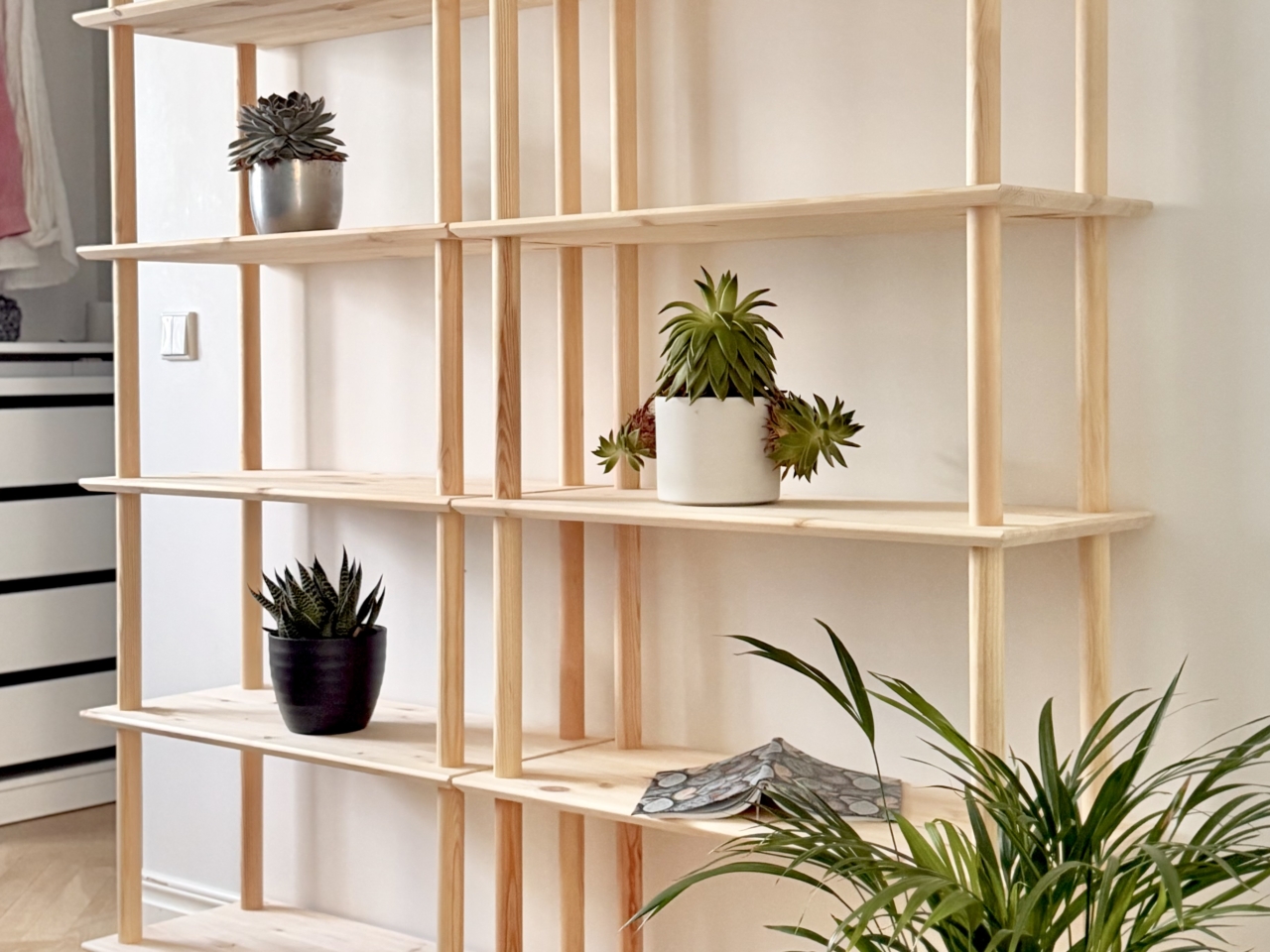
Room-dividing shelving creates a much softer boundary than a solid partition. Placed between a bed and a living space, it provides privacy while letting daylight flow through and keeping sightlines open.
This eliminates dark corners and prevents rooms from feeling boxed in. In practice, you can establish dedicated zones for sleeping, working, and relaxing while retaining the core benefits of open-plan living: natural light, flexibility, and a sense of spaciousness (read more about living room divider ideas on Homes & Gardens)
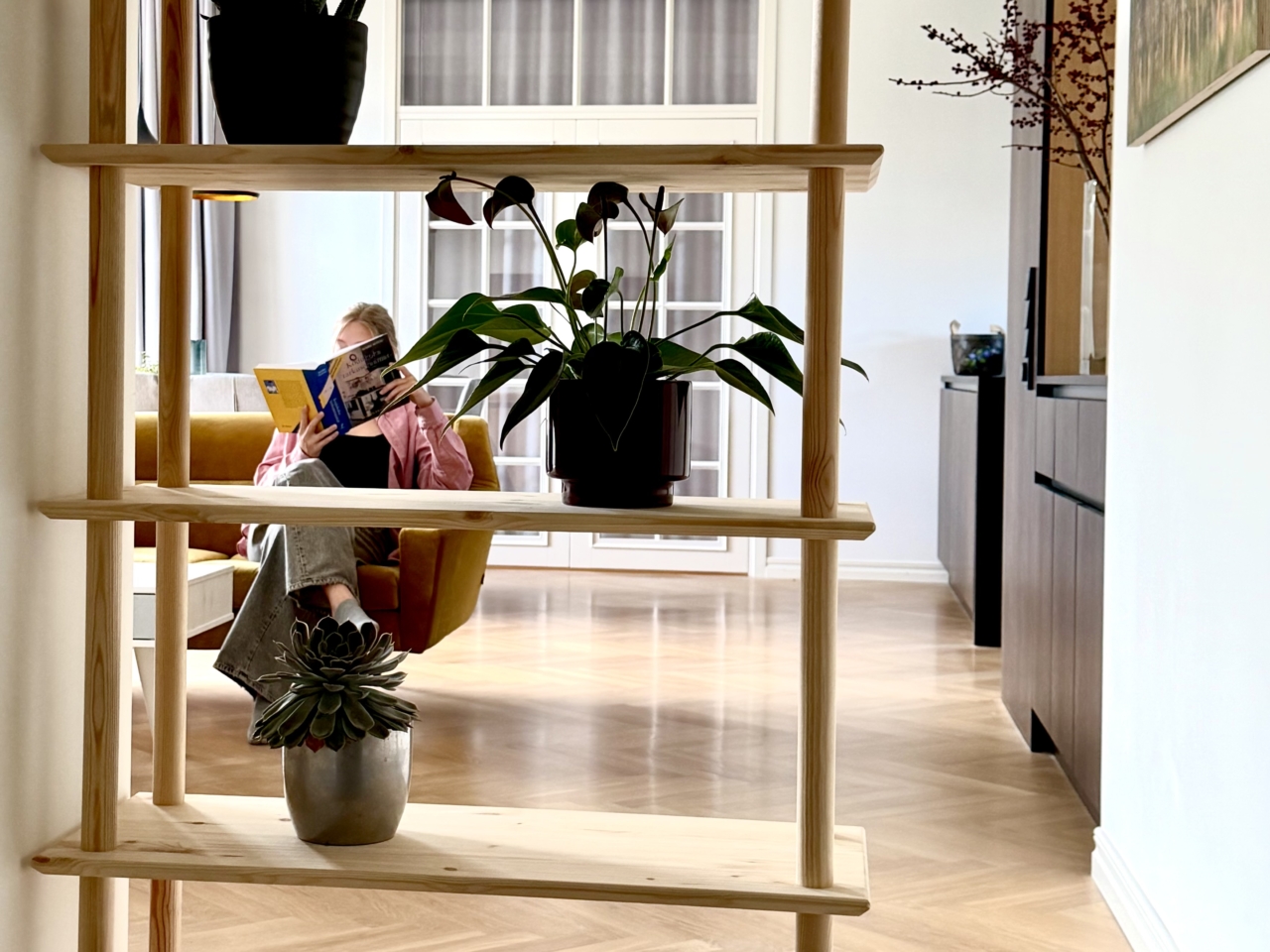
Homes are rarely static. A corner used as a home office today might become a reading nook tomorrow. Play areas evolve as children grow, and spare rooms shift between guest bedrooms and workspaces.
Permanent architecture assumes today’s layout will still make sense years down the line. Freestanding furniture makes no such assumptions.
A room-dividing shelf can be repositioned, rotated, moved to a new room, or repurposed entirely. A divider between living and dining areas today can easily become wall storage tomorrow. This flexibility allows your home to adapt seamlessly—without construction or major renovations.
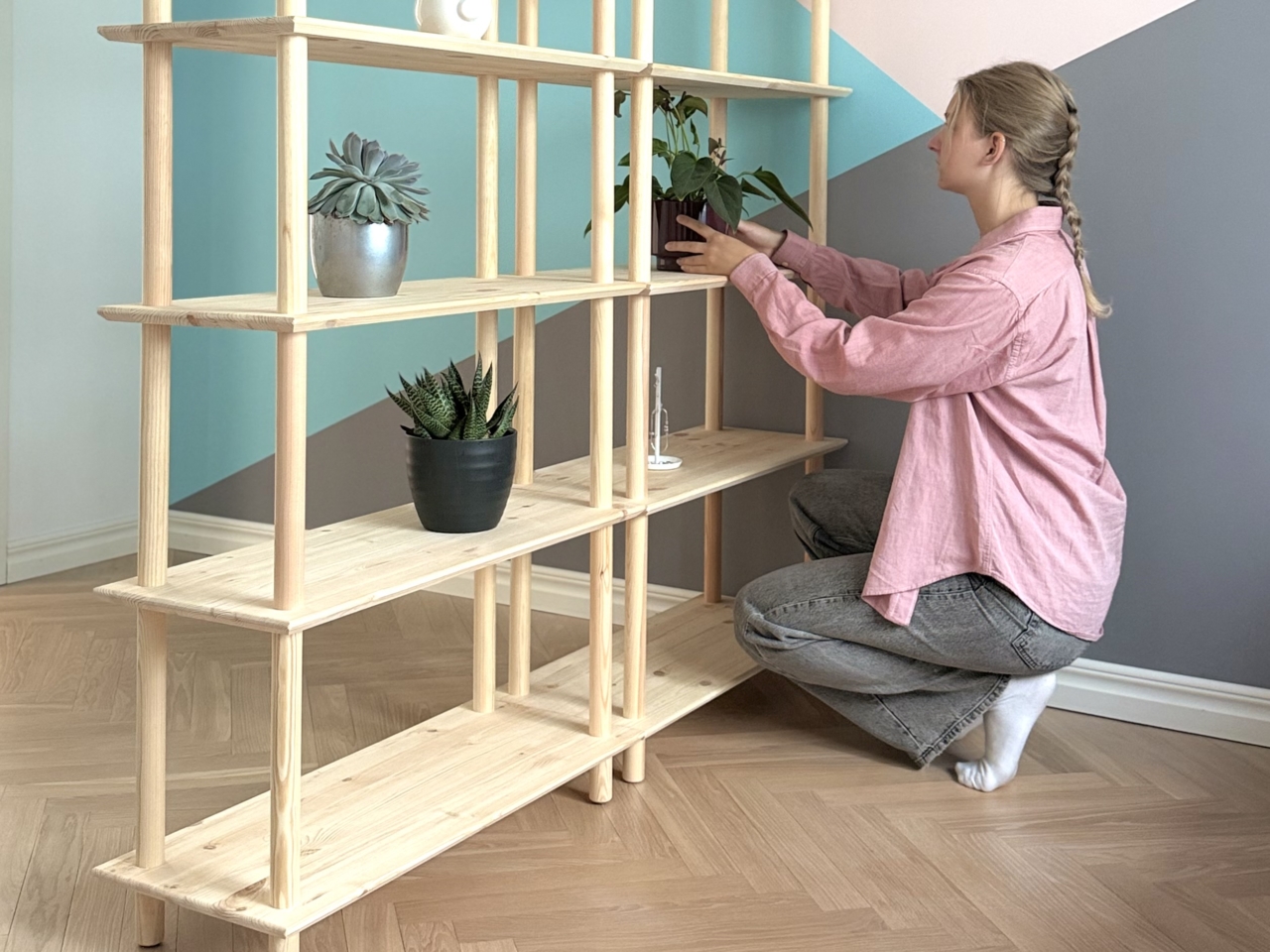
Most furniture is designed to sit against a wall and be viewed from the front. The ROHE Air shelf is designed differently: it stands comfortably within an open space, fully functional and visually clean from every angle.
This opens up practical possibilities:
With its light silhouette and natural solid wood, the ROHE Air shelf acts as a natural room divider that brings structure without adding visual noise.
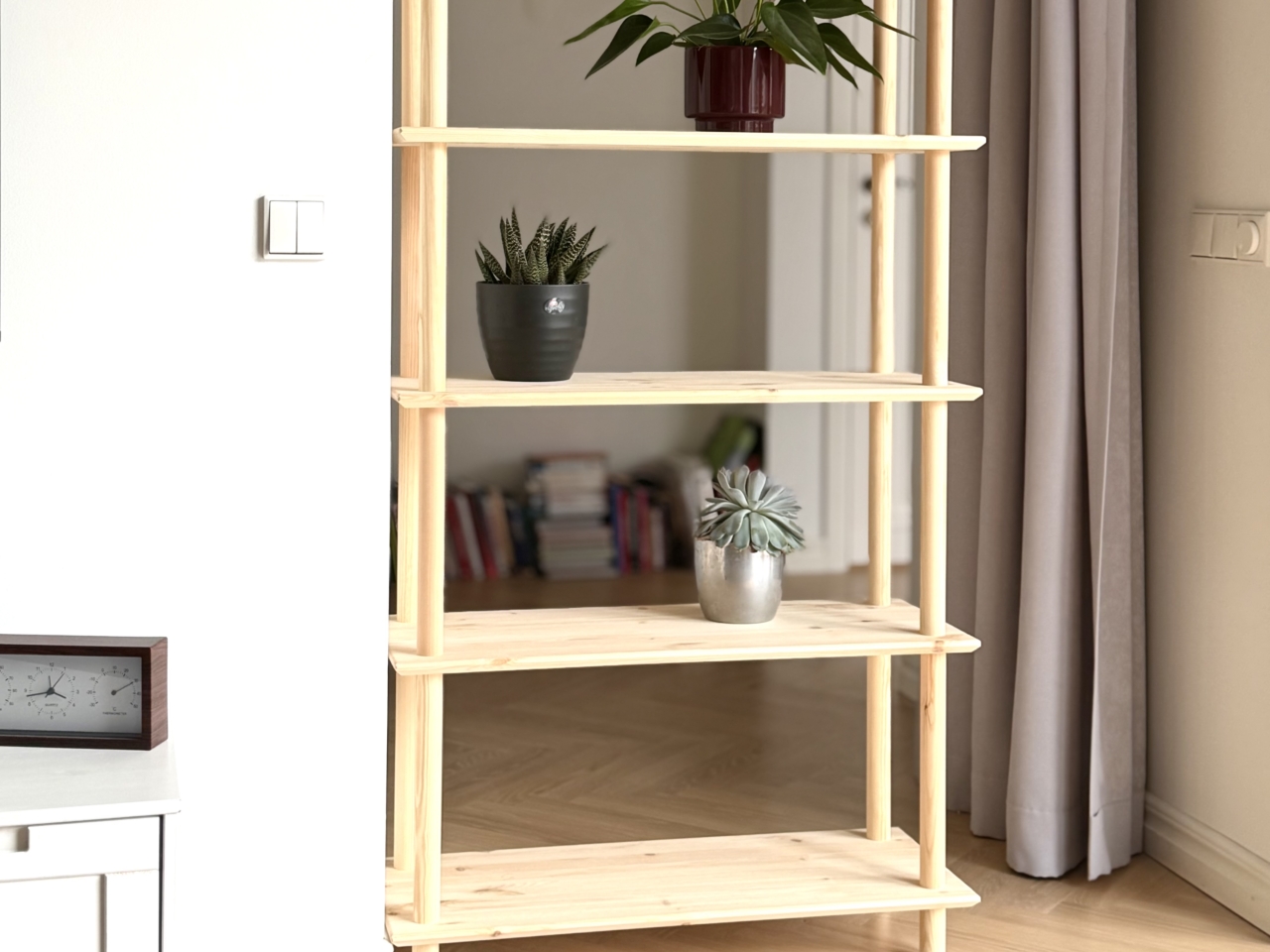
Perhaps the strongest argument for open shelving is psychological. Often, we don’t need another enclosed room—we simply need a clearer sense of where each activity belongs.
A rug defines a seating area; targeted lighting highlights a dining table. Shelving works similarly, but with greater architectural presence.
Clear boundaries shape daily habits. A defined workspace makes it easier to log off at the end of the day, while dedicated storage keeps toys and clutter from overflowing into the rest of the home.
The room hasn’t become smaller—it has simply become easier to navigate and enjoy. Ready to redefine your space? Explore the ROHE Air collection and discover how our modular open shelving can transform your home.