Menu
 Sustainable design furniture
Competitive wholesale pricing
Reliable worldwide shipping
Sustainable design furniture
Competitive wholesale pricing
Reliable worldwide shipping
Japandi is a fusion of Japanese and Scandinavian interior design — two styles that, despite their different origins, share many of the same core values. Both are rooted in functionality, simplicity, and a deep respect for natural materials. Scandinavian design brings in the idea of hygge: warmth, cosiness, and the pleasure of simple things. Japanese design adds the influence of wabi-sabi: the belief that beauty can be found in imperfection, authenticity, and the natural ageing of materials.
Together, they create a thoughtful sense of calm: clean lines, quiet design, and a warmth that more modern minimalist styles can sometimes lack. Natural materials such as wood and linen are central to the look, chosen not only for aesthetics, but also for their connection to craftsmanship and quality. Rather than filling a room with decorative objects, Japandi asks you to choose each piece with intention — prioritising function over ornamentation, and keeping spaces calm, uncluttered, and genuinely liveable.
The bedroom is the one room in your home that should ask nothing of you. No noise, no distraction — just rest. That is exactly what a Japandi-inspired bedroom is designed to support.
Nothing here is accidental, and nothing is excessive. Each piece earns its place — and the space between pieces is considered just as carefully as the pieces themselves. In a Japandi-inspired bedroom, that thinking often starts with the bed.
A low wooden bed frame works especially well because it brings the room closer to the floor, creating a softer and more balanced atmosphere. ROHE’s Air Bed follows this idea with a clean solid pine frame, strong wooden slats, and a form that feels simple without being cold. The natural pine keeps the bedroom warm and honest, while the clean design leaves space for the rest of the room to breathe.
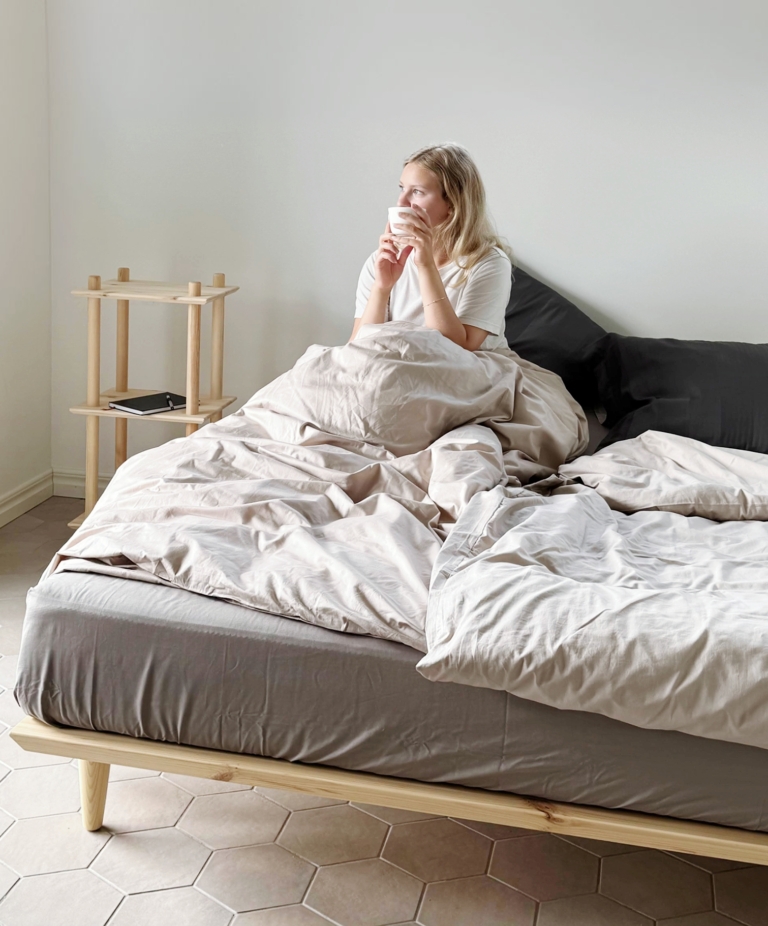
In a Japandi bedroom, storage is not an afterthought — it is part of the design itself. The aim is to keep the room uncluttered without replacing one kind of visual noise with another. That is why light, simple storage works so well. A wooden chest can hide away extra bedding, seasonal textiles, or everyday items, while still feeling like a natural part of the room. ROHE’s Air Chest offers practical storage in a clean solid pine form, and can also work as a bench or a low surface beside the bed.
For smaller essentials, wall-mounted storage helps keep the floor clear. ROHE’s Air Wall Shelf gives space for a book, a phone, a lamp, or a glass of water without adding a heavy bedside cabinet.
Open shelving can also work beautifully in a Japandi bedroom, as long as it is used with restraint. ROHE’s Air Modular Shelf is designed for books, baskets, folded textiles, plants, or a few personal objects — but the key is not to fill every shelf. Leave space around things. In Japandi interiors, empty space is not wasted; it is part of the calm.
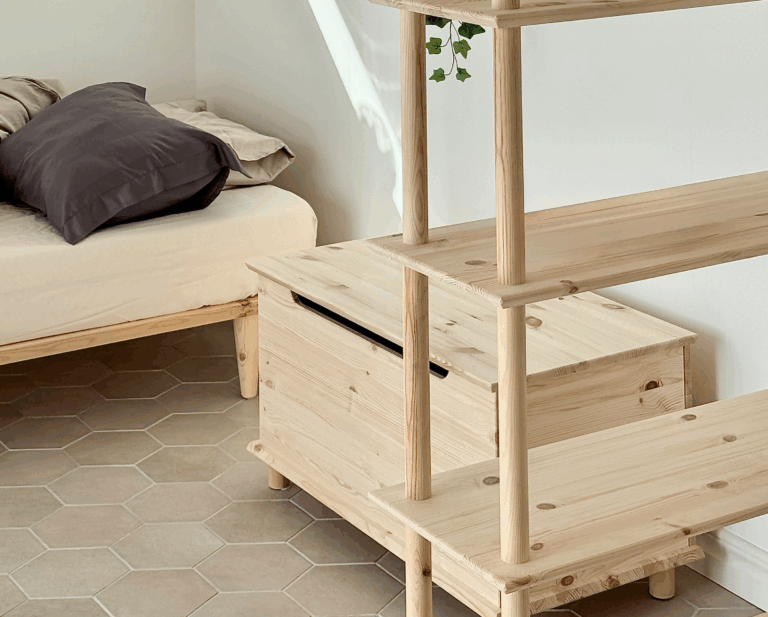
A Japandi bedroom works best when the colours feel calm and connected to nature. Think warm white, soft beige, sand, light grey, muted brown, and natural wood tones. The aim is not to make the room look plain, but to create a background where the materials can speak for themselves.
Natural pine fits especially well into this palette because it brings warmth without making the room feel dark or heavy. Against linen bedding, soft walls, and simple lighting, the grain and knots of the wood become part of the room’s quiet character.
Avoid strong contrasts, glossy finishes, and too many competing colours. In a Japandi bedroom, the calm comes from balance: soft light, natural tones, and materials that age beautifully over time.
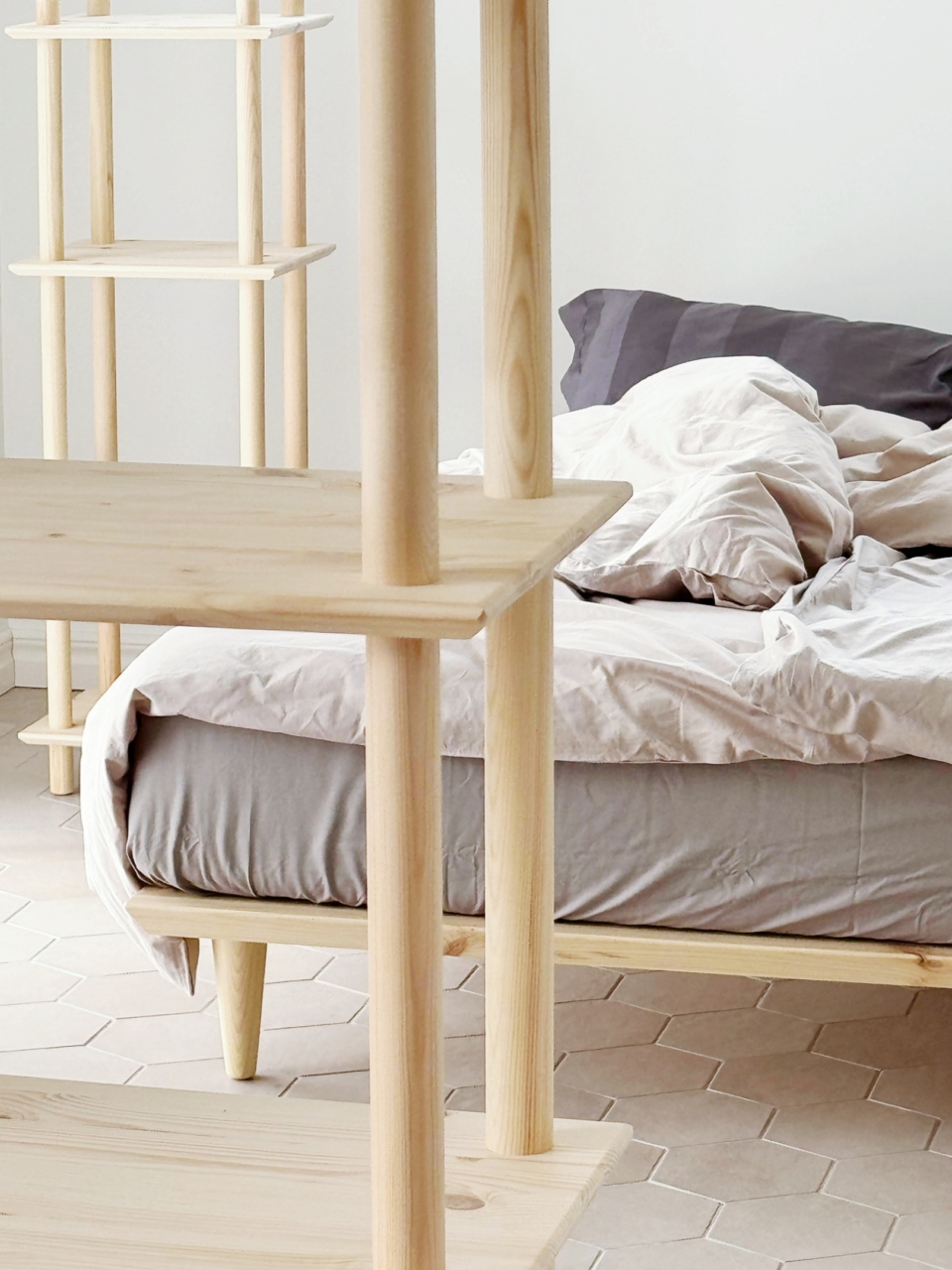
Once the main wooden pieces are in place, textiles should support the same calm direction. Linen or cotton bedding in soft neutral tones — warm white, beige, sand, muted grey, or pale earthy shades — works best. Avoid strong patterns and too many decorative pillows. In a Japandi bedroom, texture matters more than decoration.
Japandi is not about making a bedroom look empty or perfect. It is about choosing fewer, better pieces: natural materials, clear function, quiet forms, and a room that feels calm enough to rest in.